

Bridgestone World Solar Challenge 2025
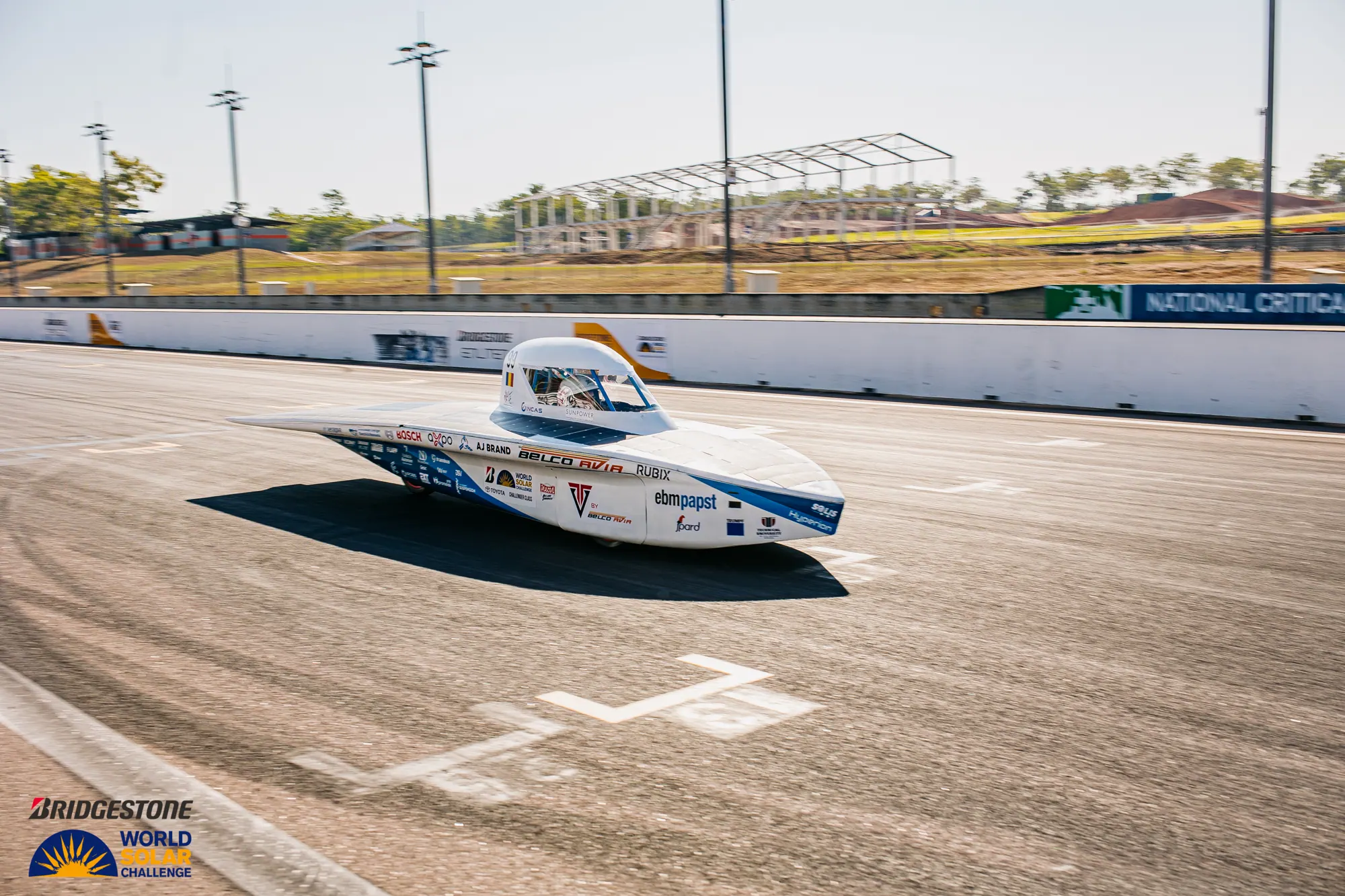
Hyperion left Darwin on 24 August and got as far as Port Augusta, about 2,700 km from the start. Its best day: 552 km at an average of 70 km/h.
- to Port Augusta
- 2,700km
- on day two
- 552km
| Vehicle | Class | Distance | Result | Details |
|---|---|---|---|---|
| Hyperion | Challenger | about 2,700 km | 18th of 26 | Qualifying: 2:23:37, 20th on the grid |
How it went.
With Hyperion.
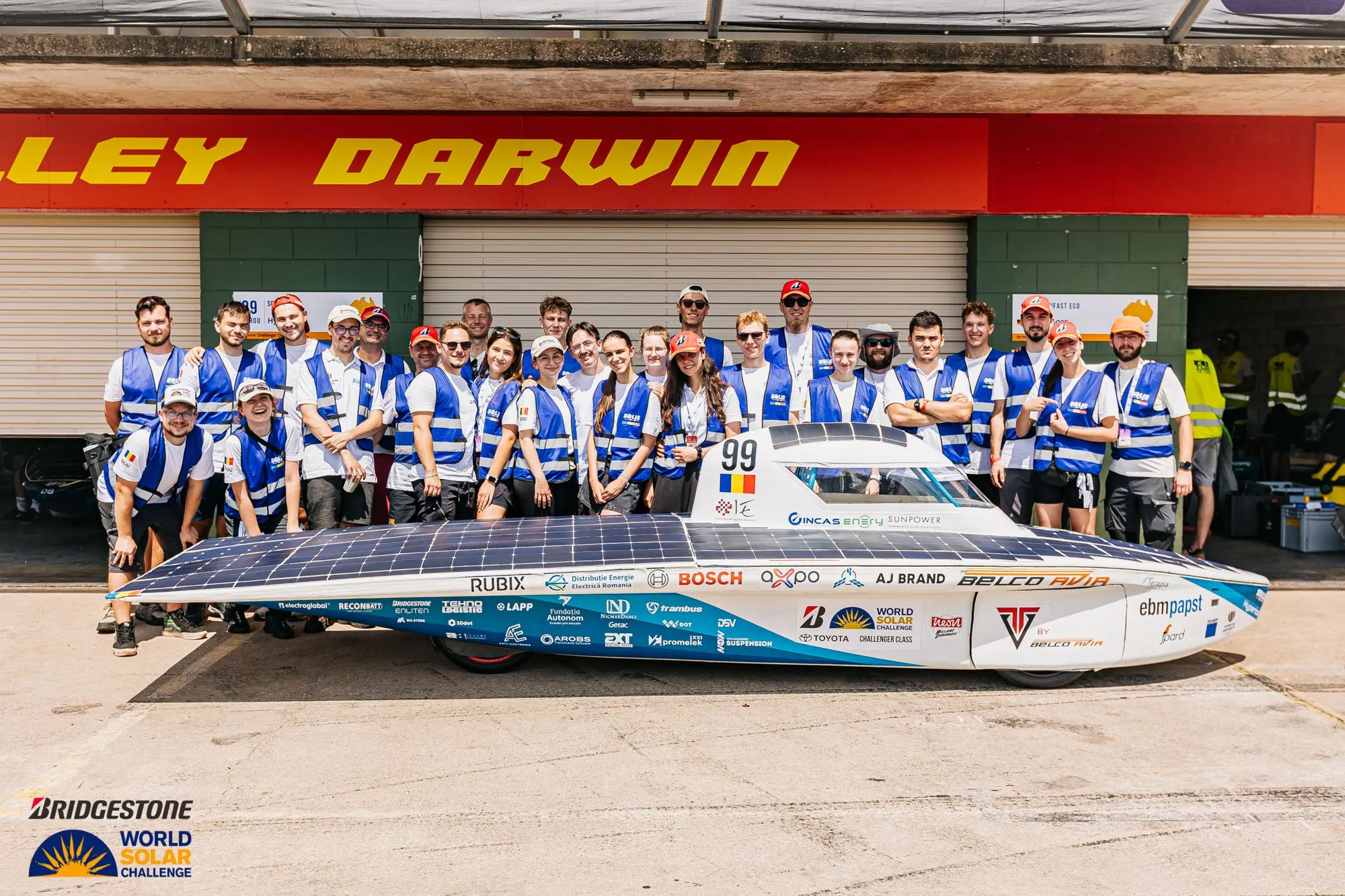
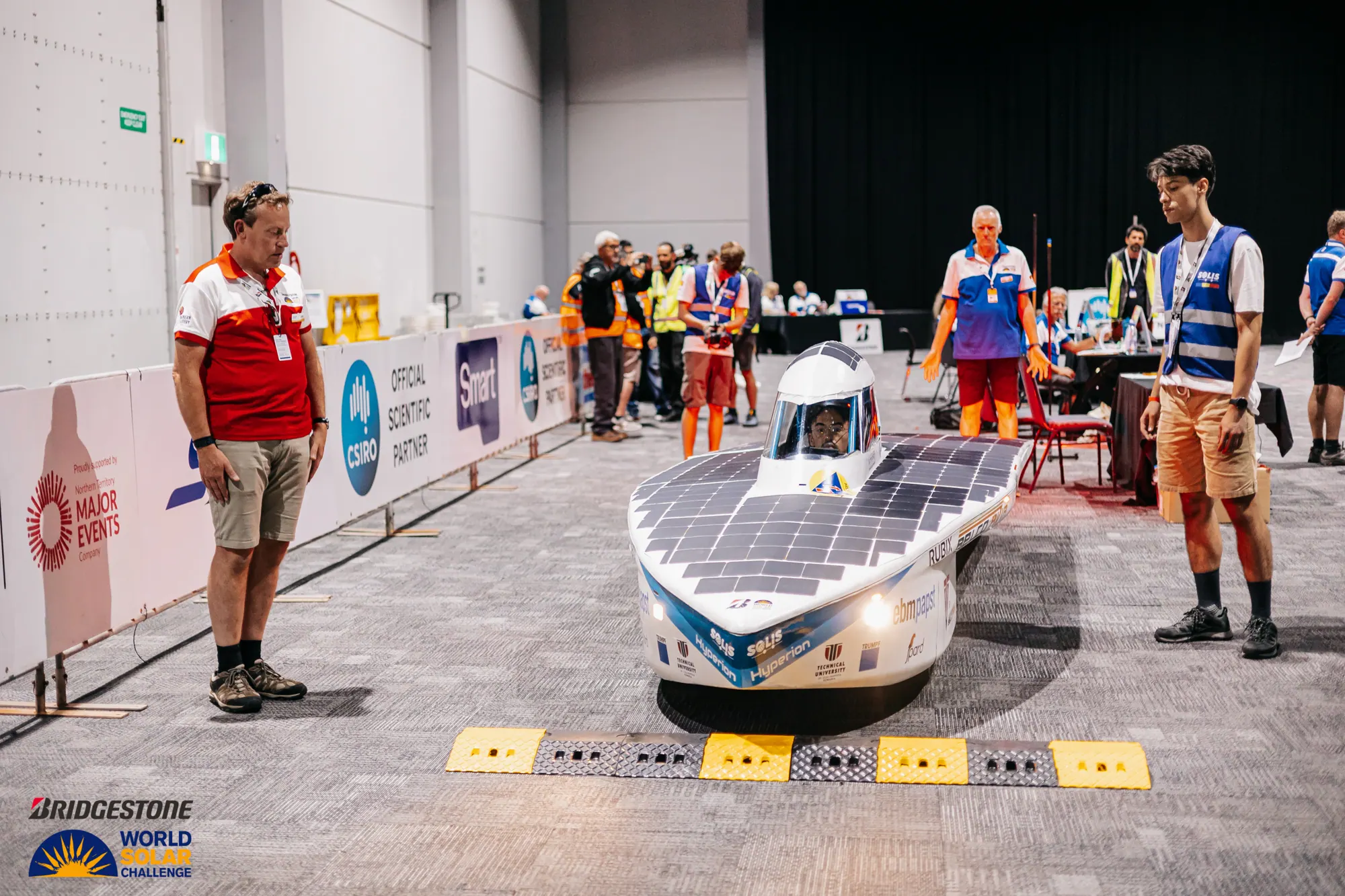
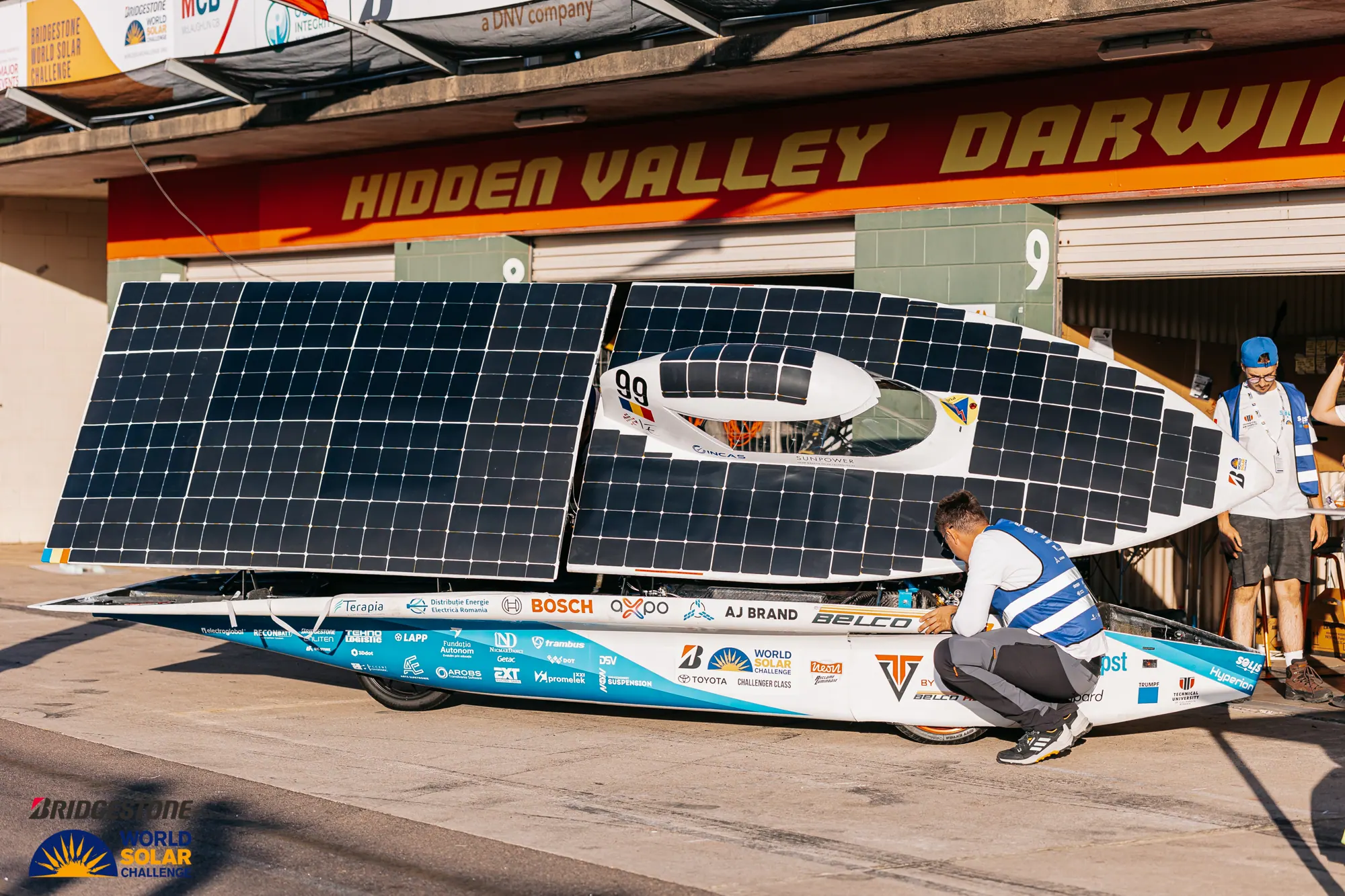
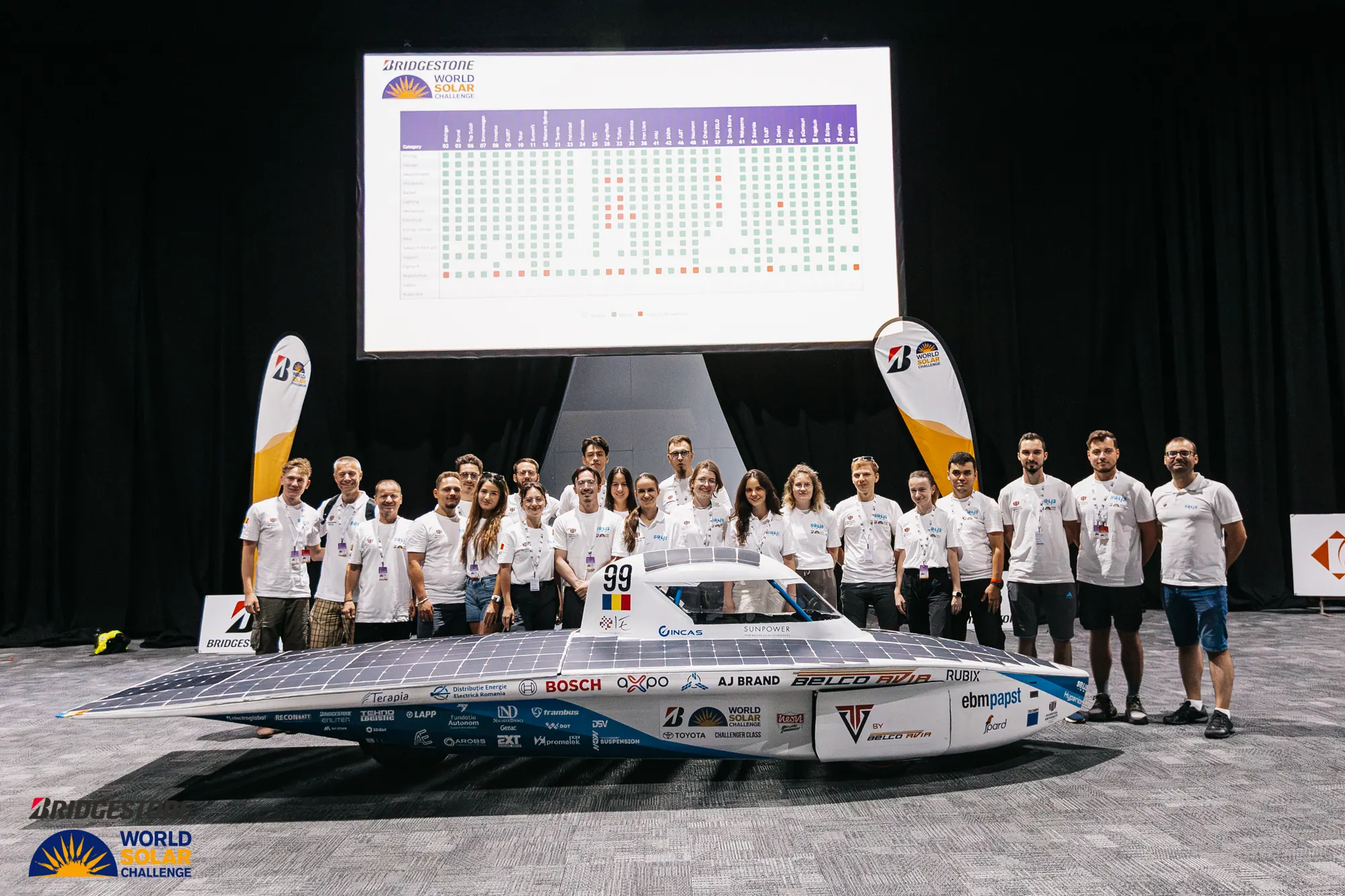
The first 15 members reached Darwin on 9 August and the rest of the team on the 16th. Scrutineering started on 18 August, and on the 23rd Hyperion passed the dynamic test and qualified in 2:23:37, 20th on the grid. The race team was 23 students, two professors and a representative of the Romanian Auto Registry.
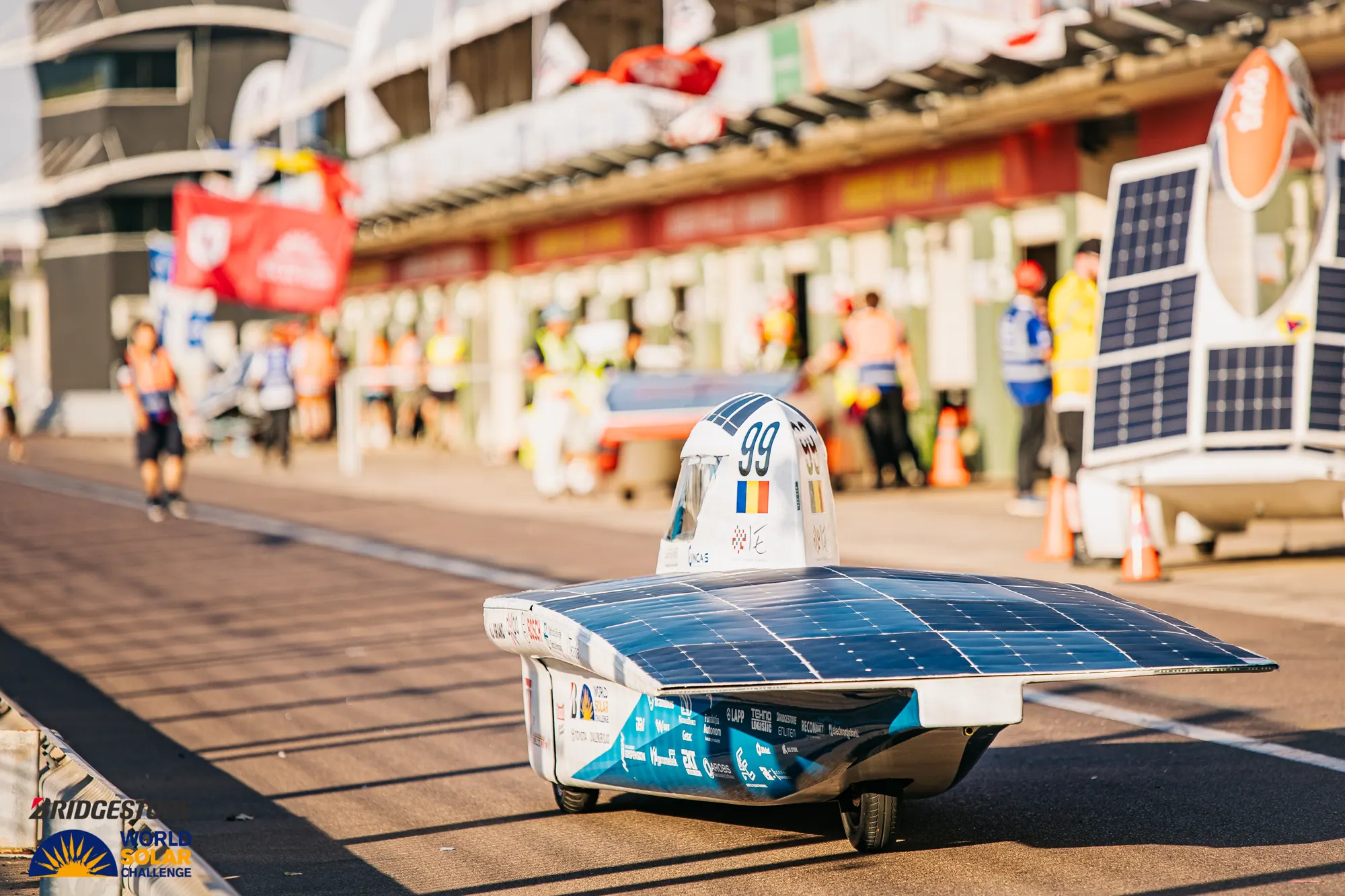
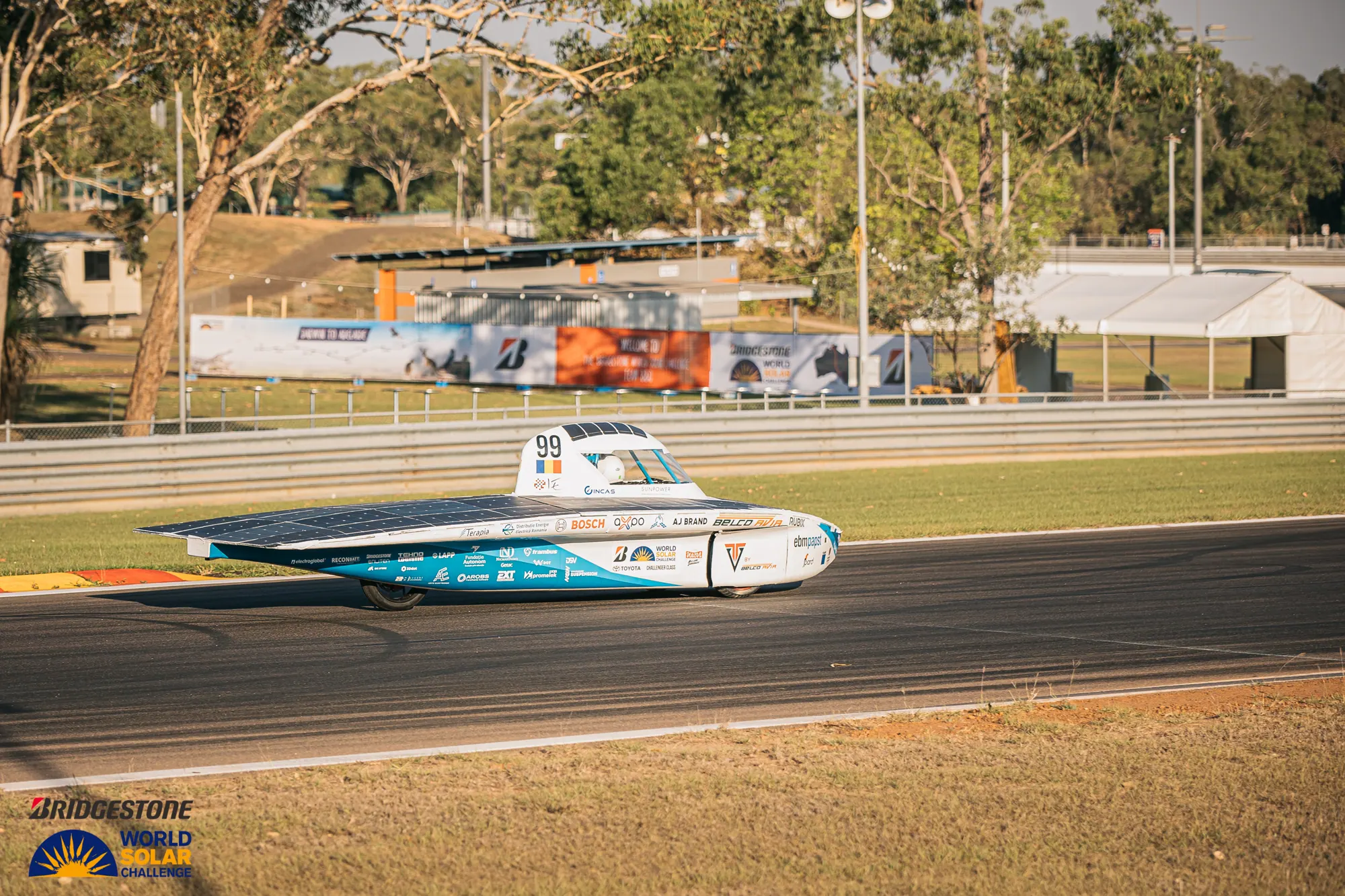
On 24 August we set off from in front of Parliament House in Darwin. On day one, drivers Raymond Nemeth and Paul Groza covered 495 km, through the Katherine control stop. Day two added another 552 km, through Dunmarra and Tennant Creek, at an average of 70 km/h. After two days we were 15th in the Challenger class, 1,060 km from Darwin.
On the way a battery management system failed; the crew fixed it at the roadside in 90 minutes. We camped five nights in the desert. On the last day, after a tornado warning, a very strong gust pushed the vehicle off the road into a boulder, with less than 300 km to go. Nobody was hurt. Hyperion was taken on to Adelaide by truck, where the team crossed the finish line officially. The official standings put us 18th of 26 in the Challenger class, with Port Augusta as the last control stop reached.
“We may not have finished the whole race, but we gave everything we had, and we still had more to give. We learnt an enormous amount and we are grateful that we crossed the finish line with the vehicle on its own wheels.”
The Solis team, at the end of the race
How the race works.
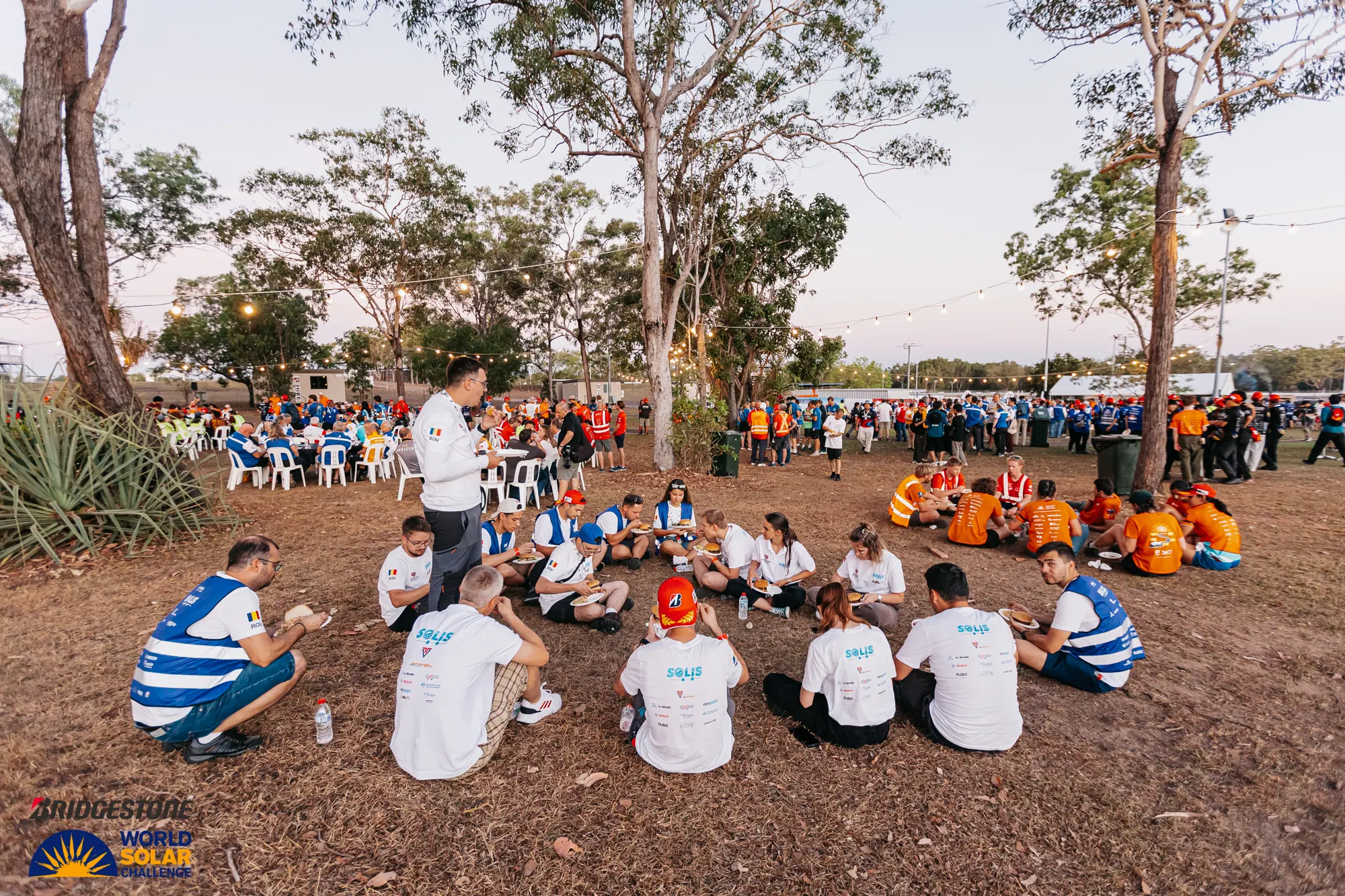
About 3,000 km on public roads, from Darwin in the north to Adelaide in the south. The vehicles set off every morning at 08:00 and stop at 17:00 wherever they are, and the team camps by the road. There are compulsory control stops along the way.
Challenger class
Single-seat vehicles built for speed and efficiency. The first to Adelaide wins. The solar array is at most 6 m² and the battery at most 11 MJ, about 3 kWh.
Cruiser class
Vehicles with two or more seats, also judged on how practical they are. The battery may hold up to 55 MJ.
Control stops
At every control stop the vehicle waits for 30 minutes. Nobody in the team may touch it until the last five minutes, and repairs are not allowed, not even a strip of tape.
Charging
Once the race starts, the only source of energy is the sun. In the morning, the evening and at control stops, the panel is tilted towards it to charge the battery.
Along the route
- Darwin
- Katherine
- Daly Waters
- Tennant Creek
- Alice Springs
- Coober Pedy
- Port Augustawhere Hyperion stopped
- Adelaide
The race film.
Documentary, 28 minutes, filmed and edited by the team.
Photographs.
In the press.
Solis releases a documentary about Hyperion in Australia
Solis finishes 18th of 26 Challengers after six days in Australia
Tudor Băldean on the battery, wildlife and road trains of Australia
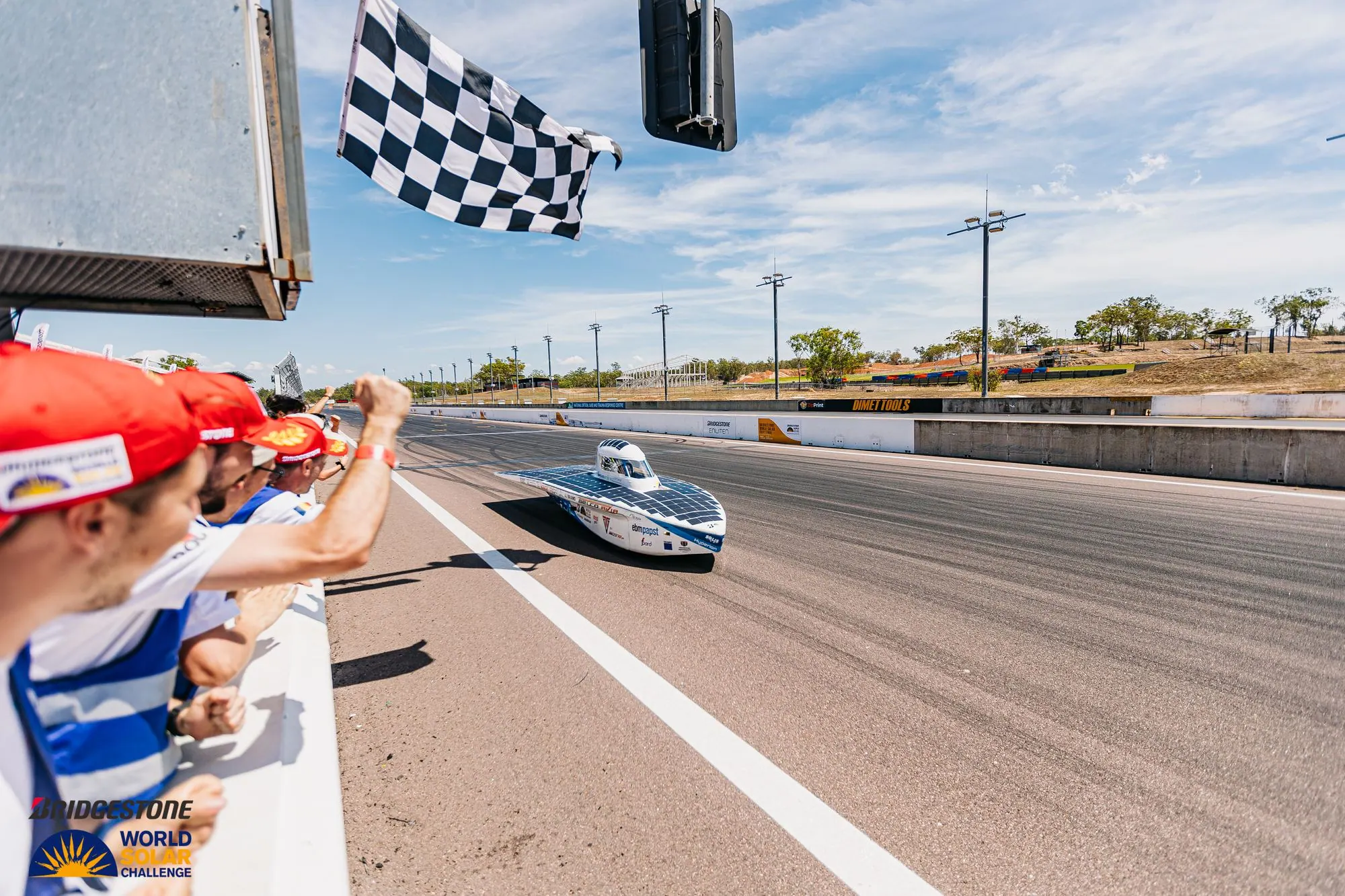
Hyperion crosses the finish line in Adelaide on the last day
Solis ends its Australian race short of the full route