
HyperionHyperion Origin
Three wheels, one driver, and a deck of silicon where the engine would be.
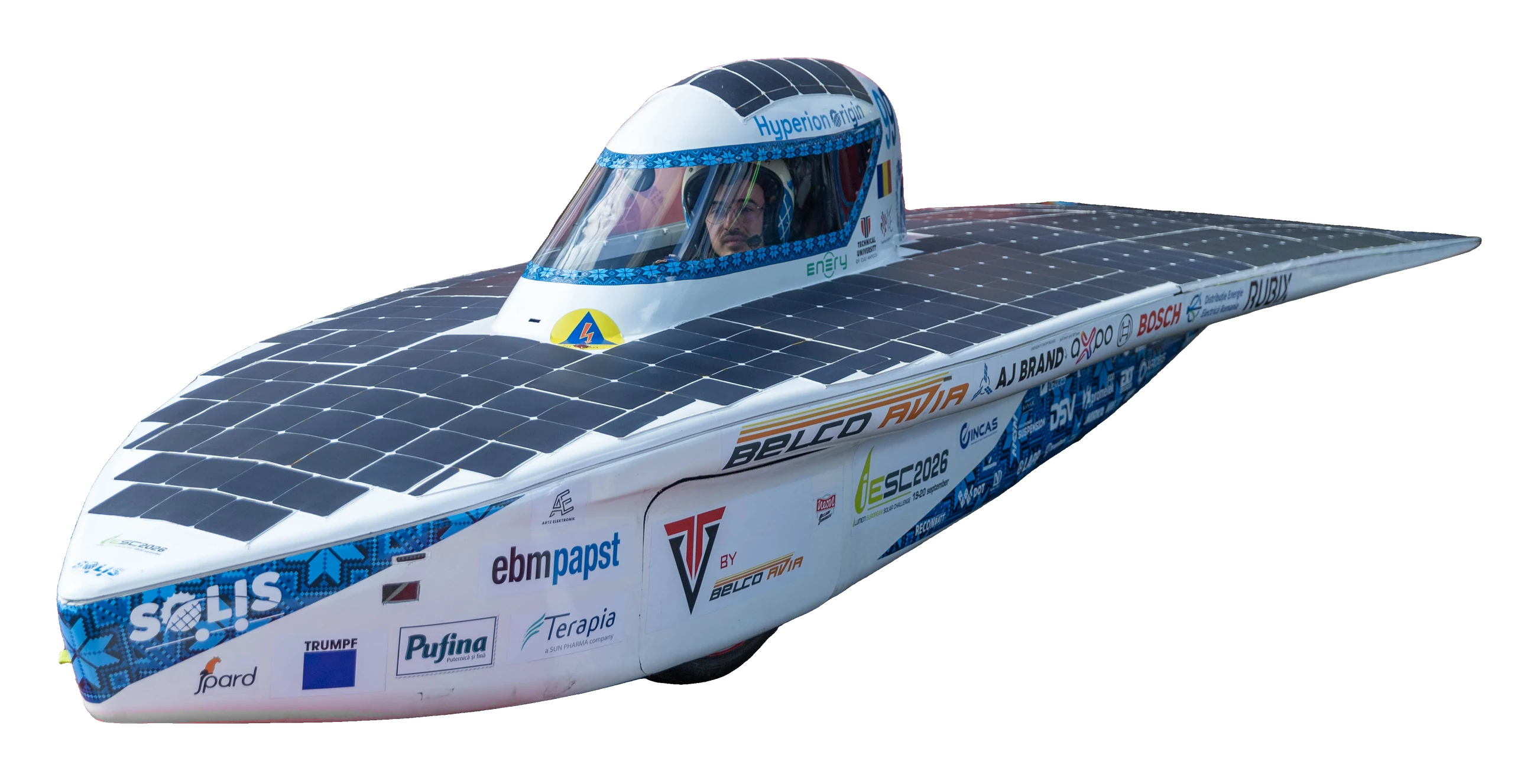
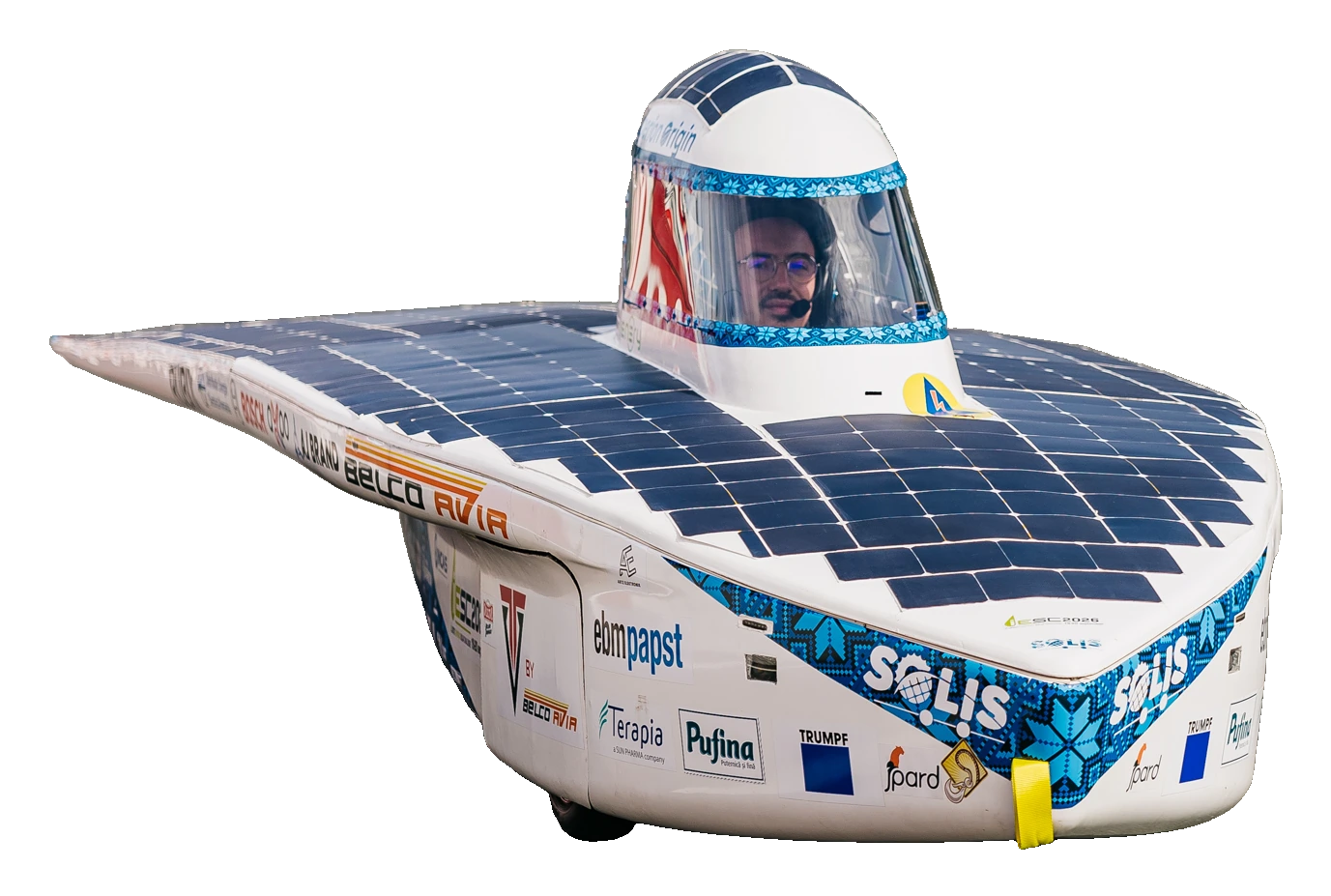
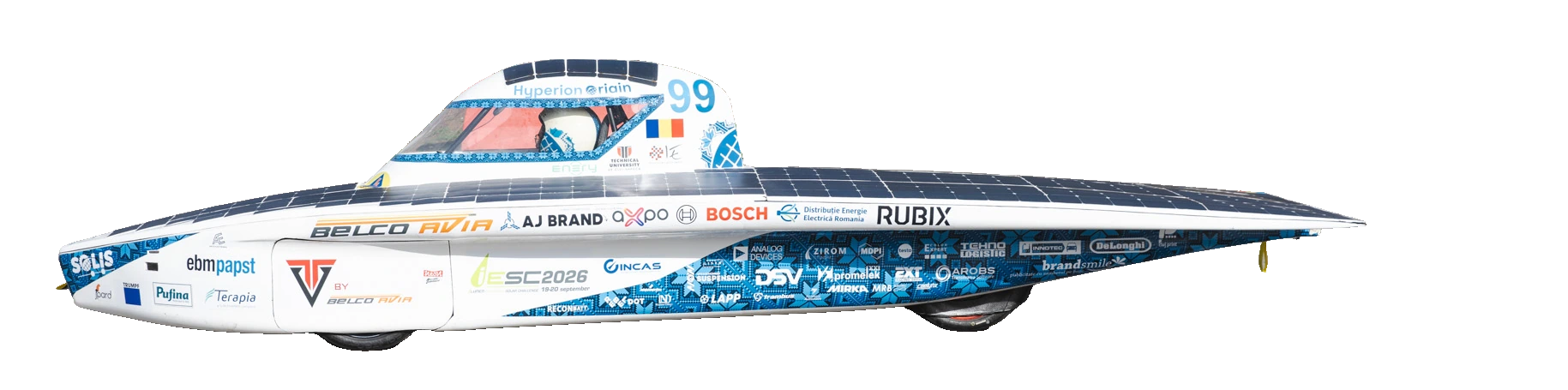
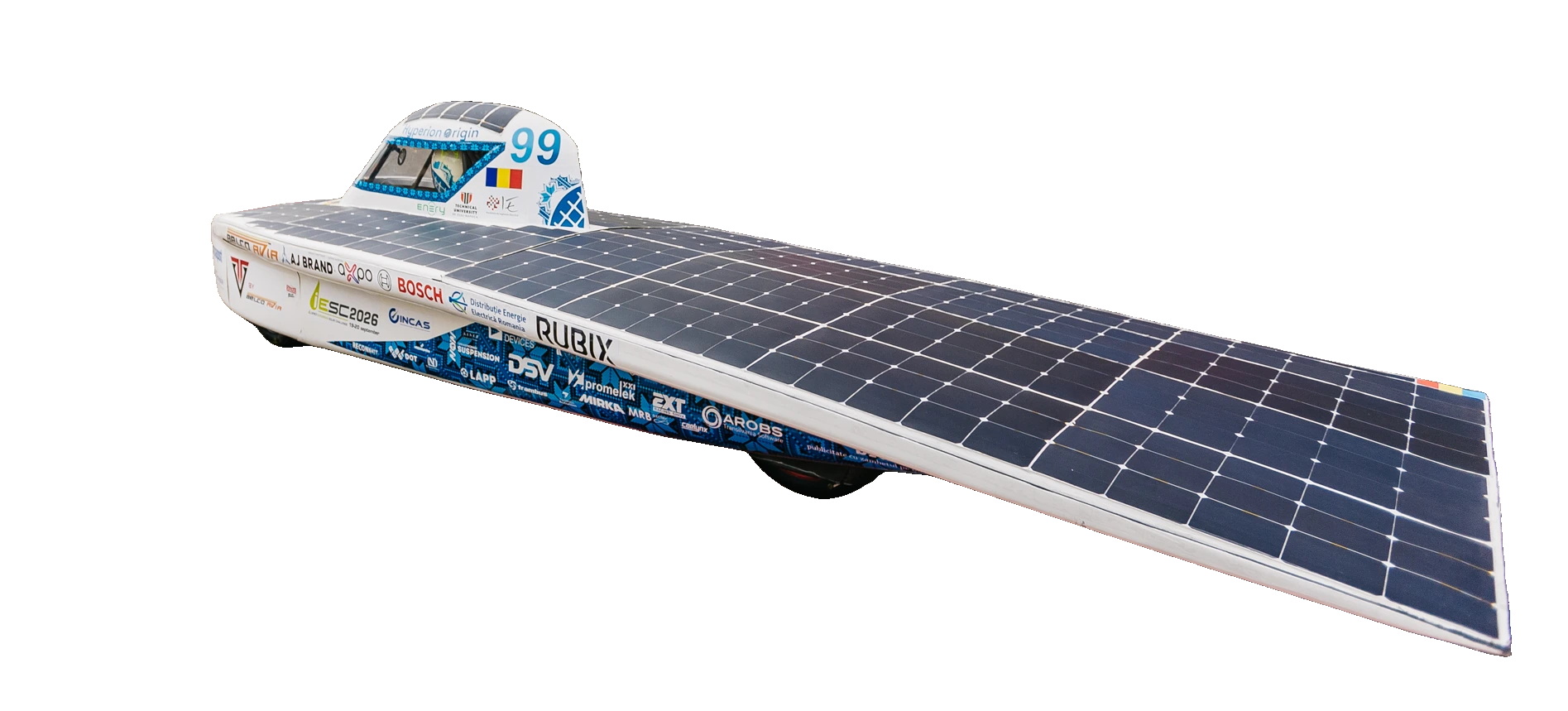
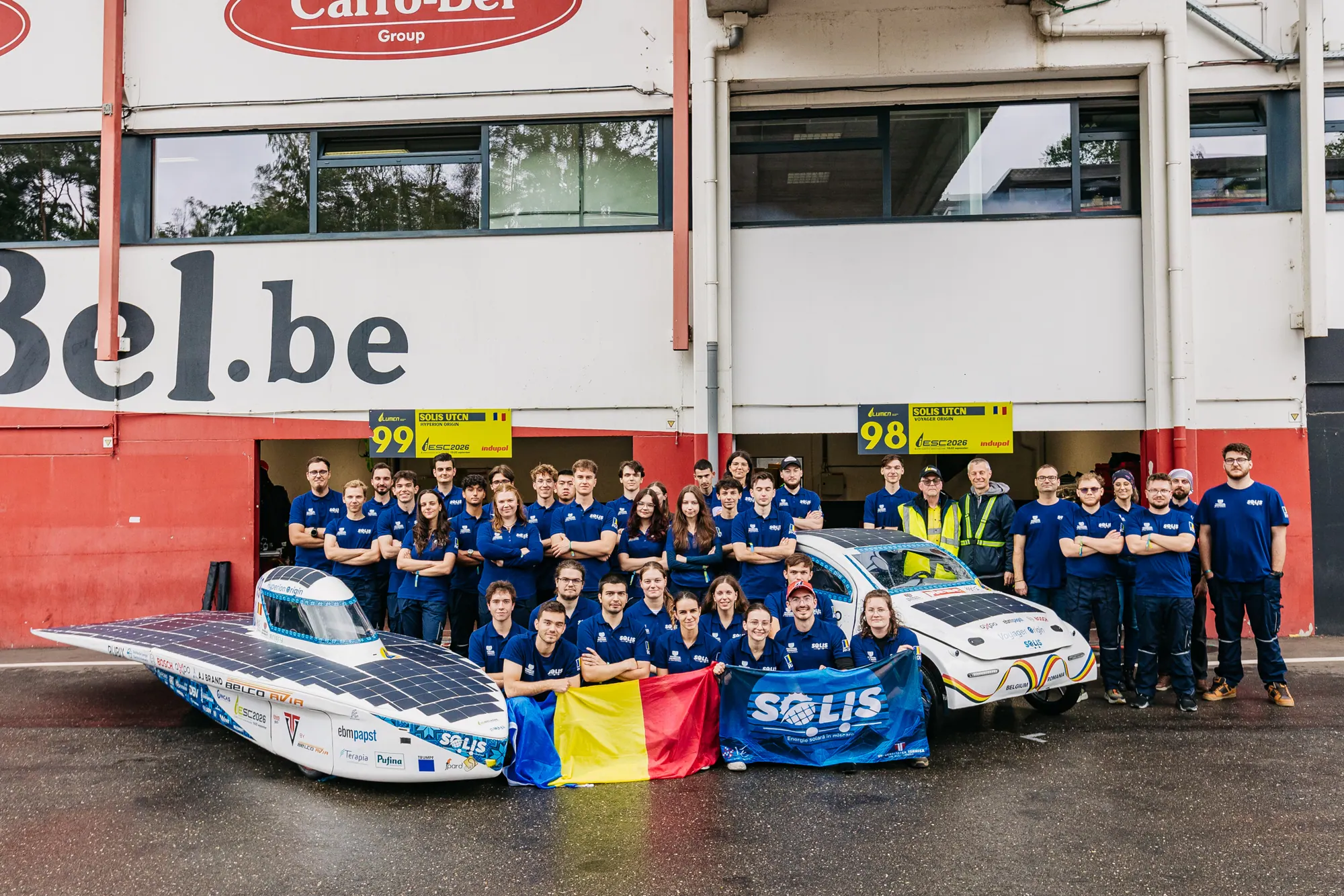
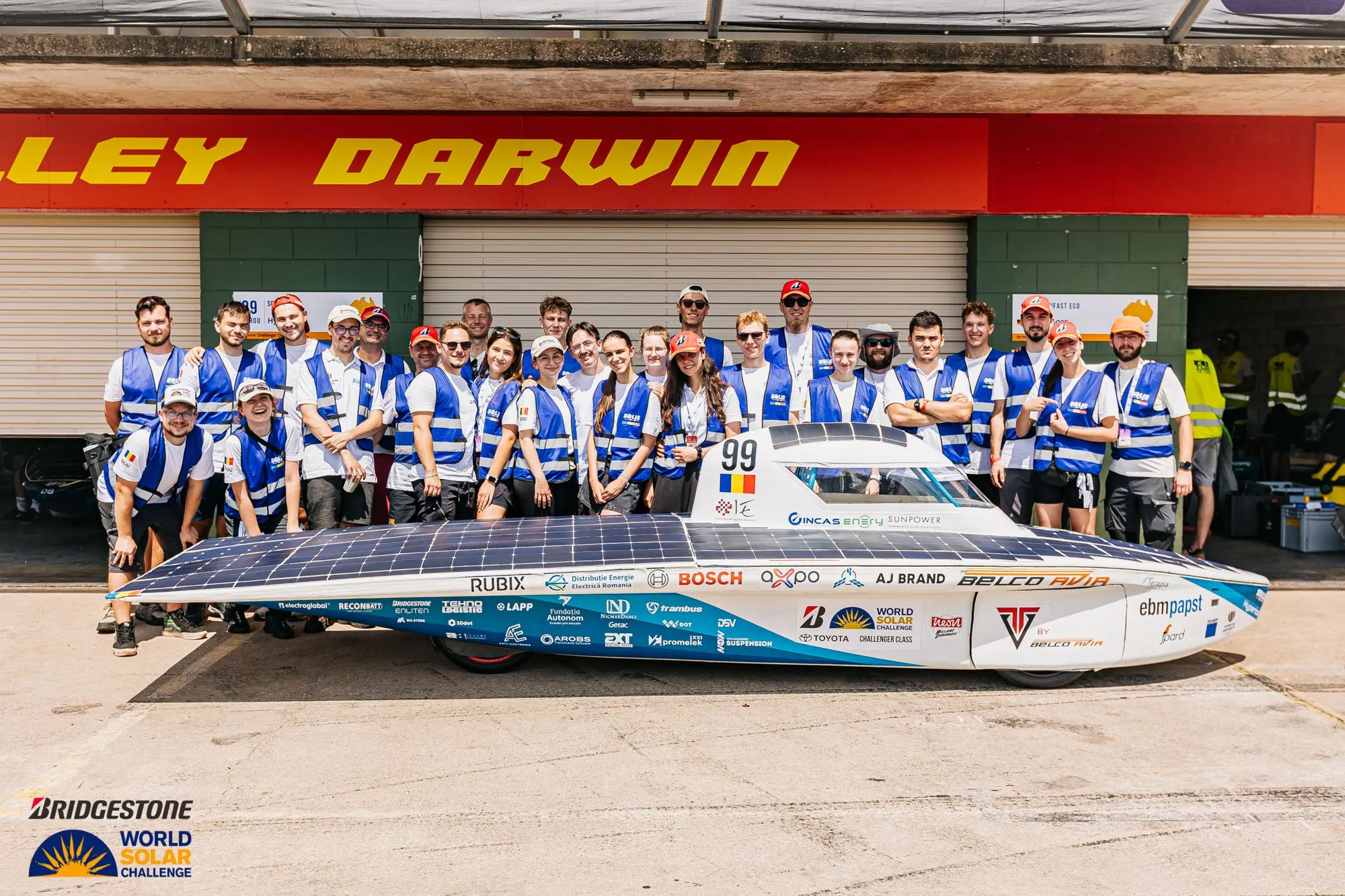
The fifth Solis vehicle. Australia in 2025, 24 hours at Zolder in 2026.
Photographs of the real vehicle. Drag sideways or use the buttons.
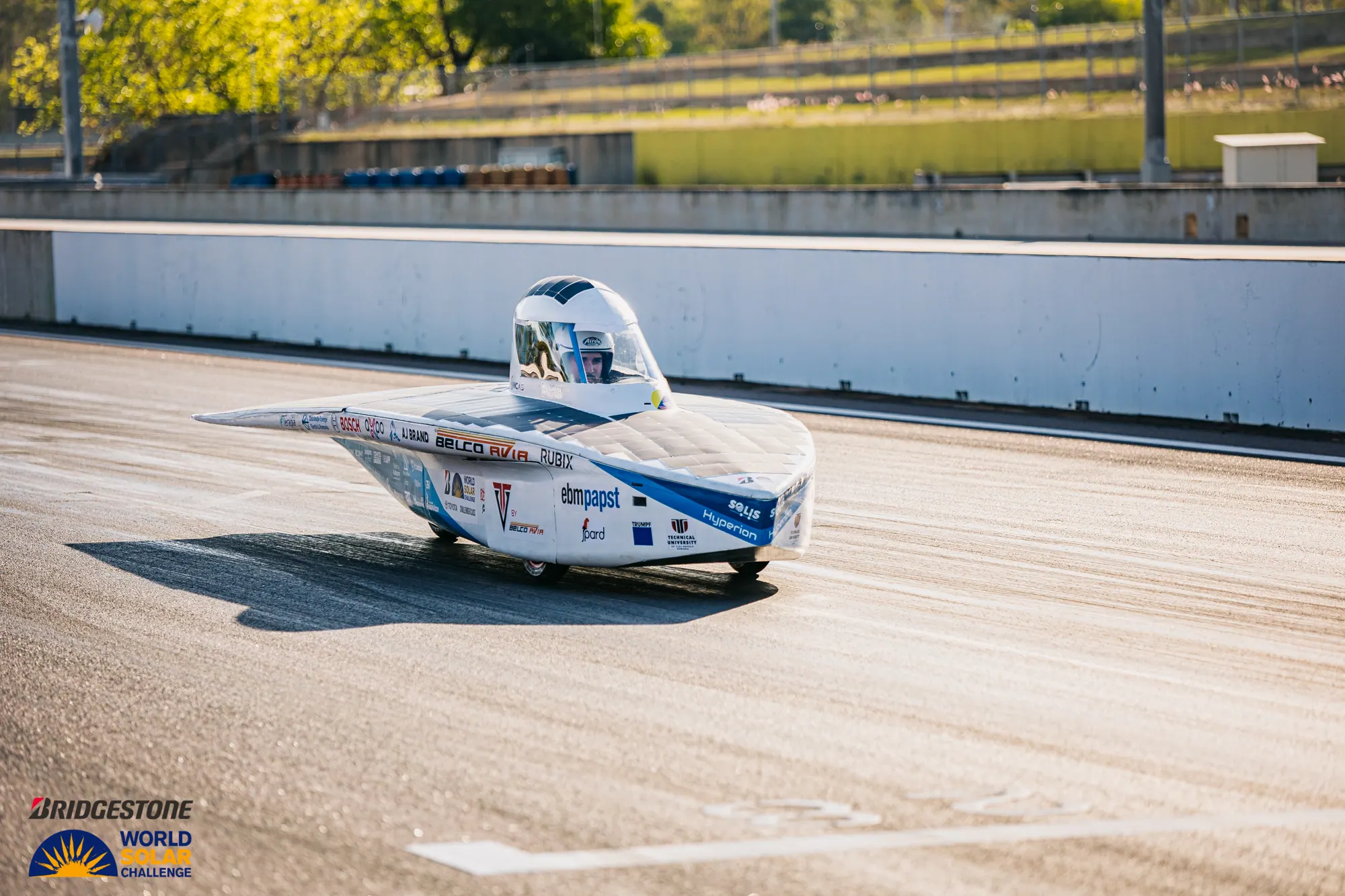
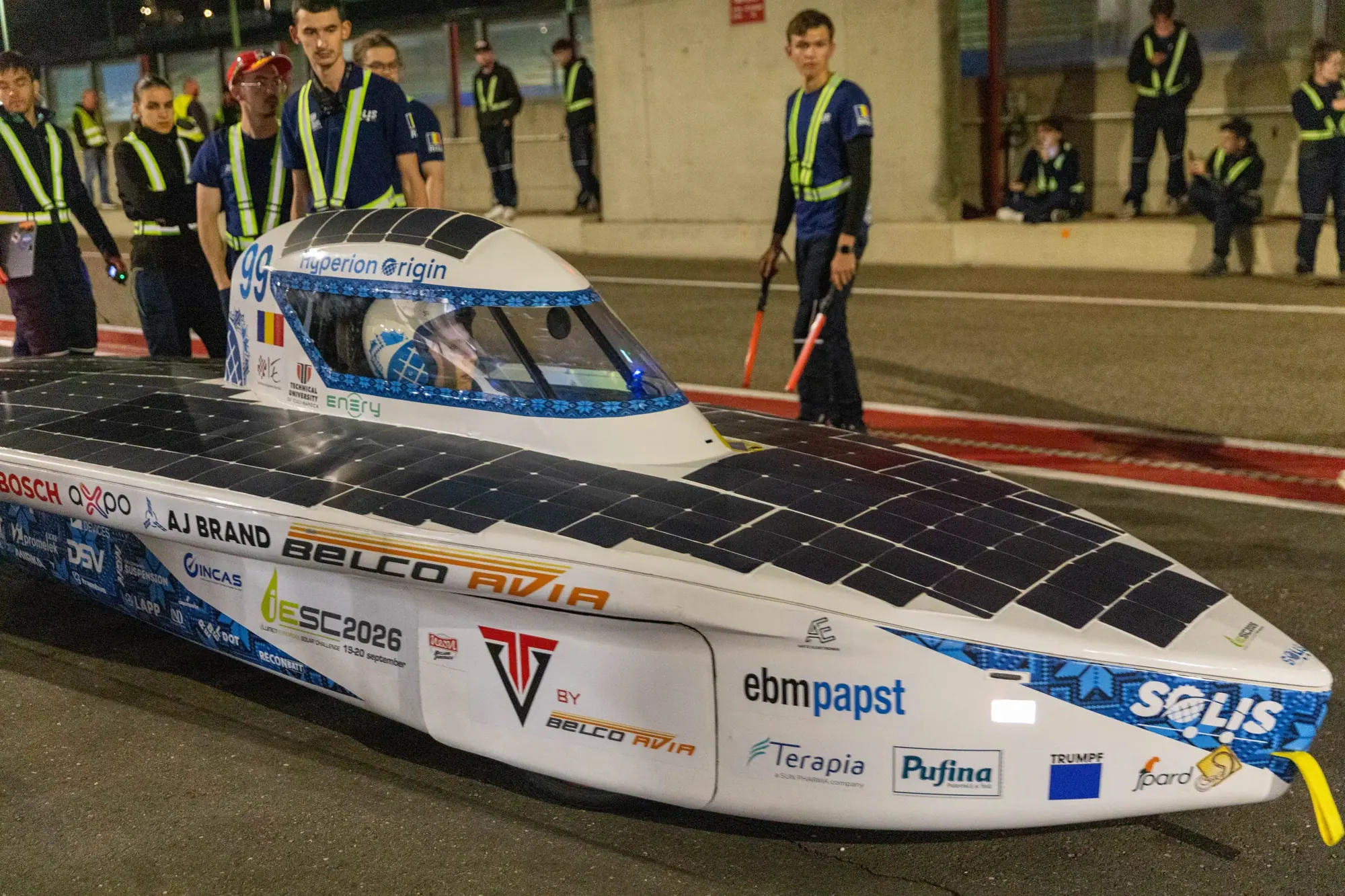
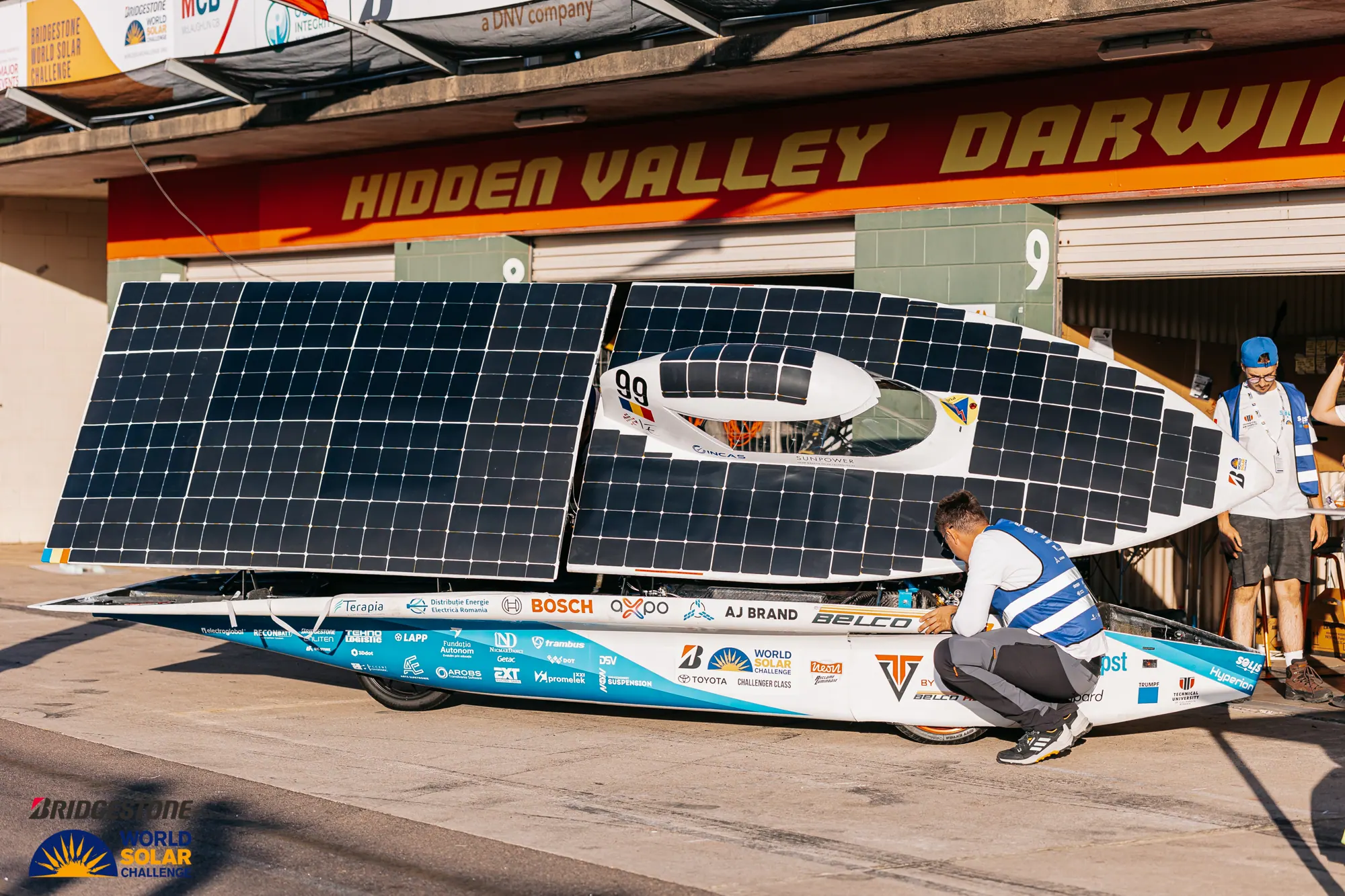
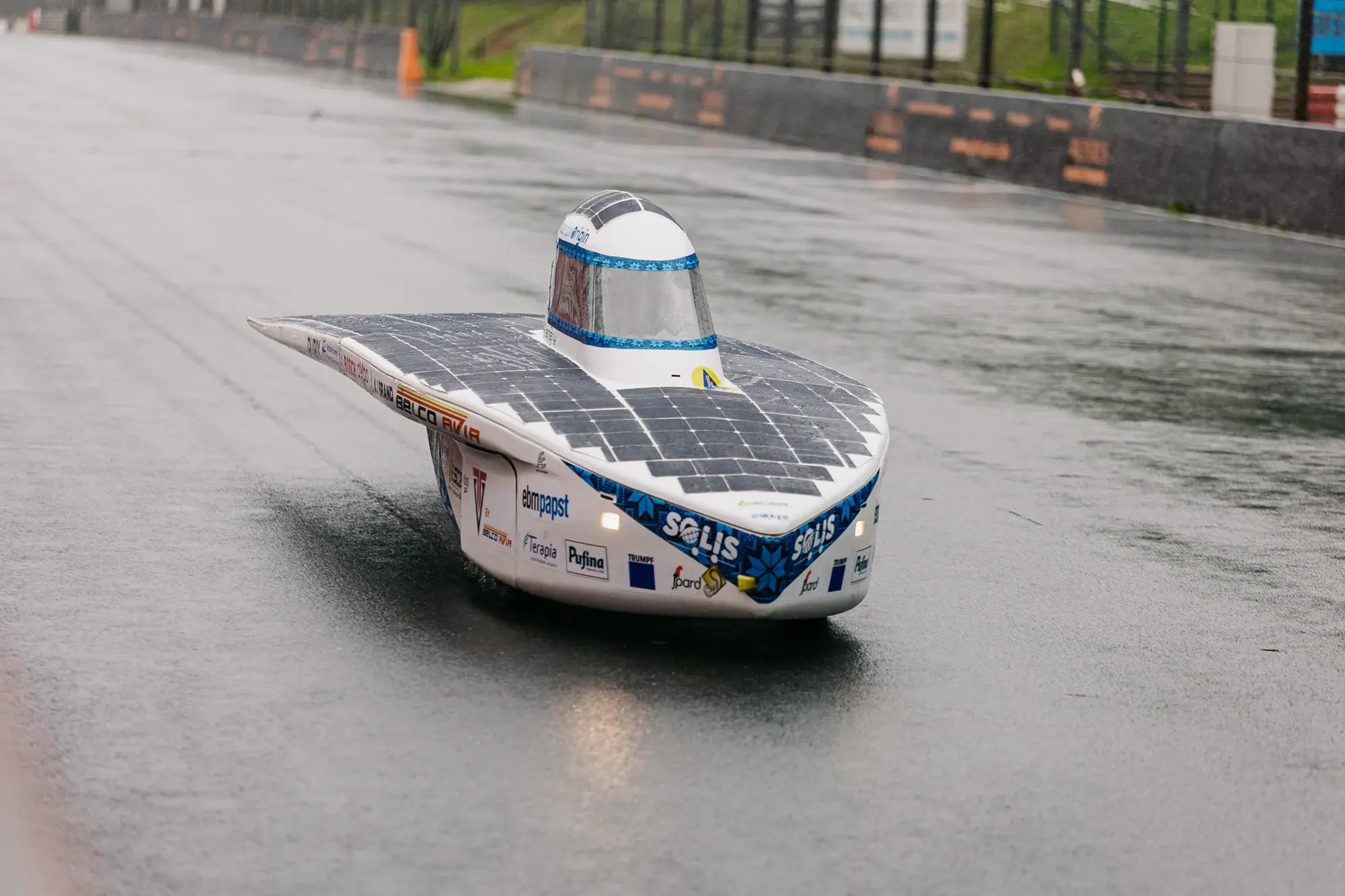
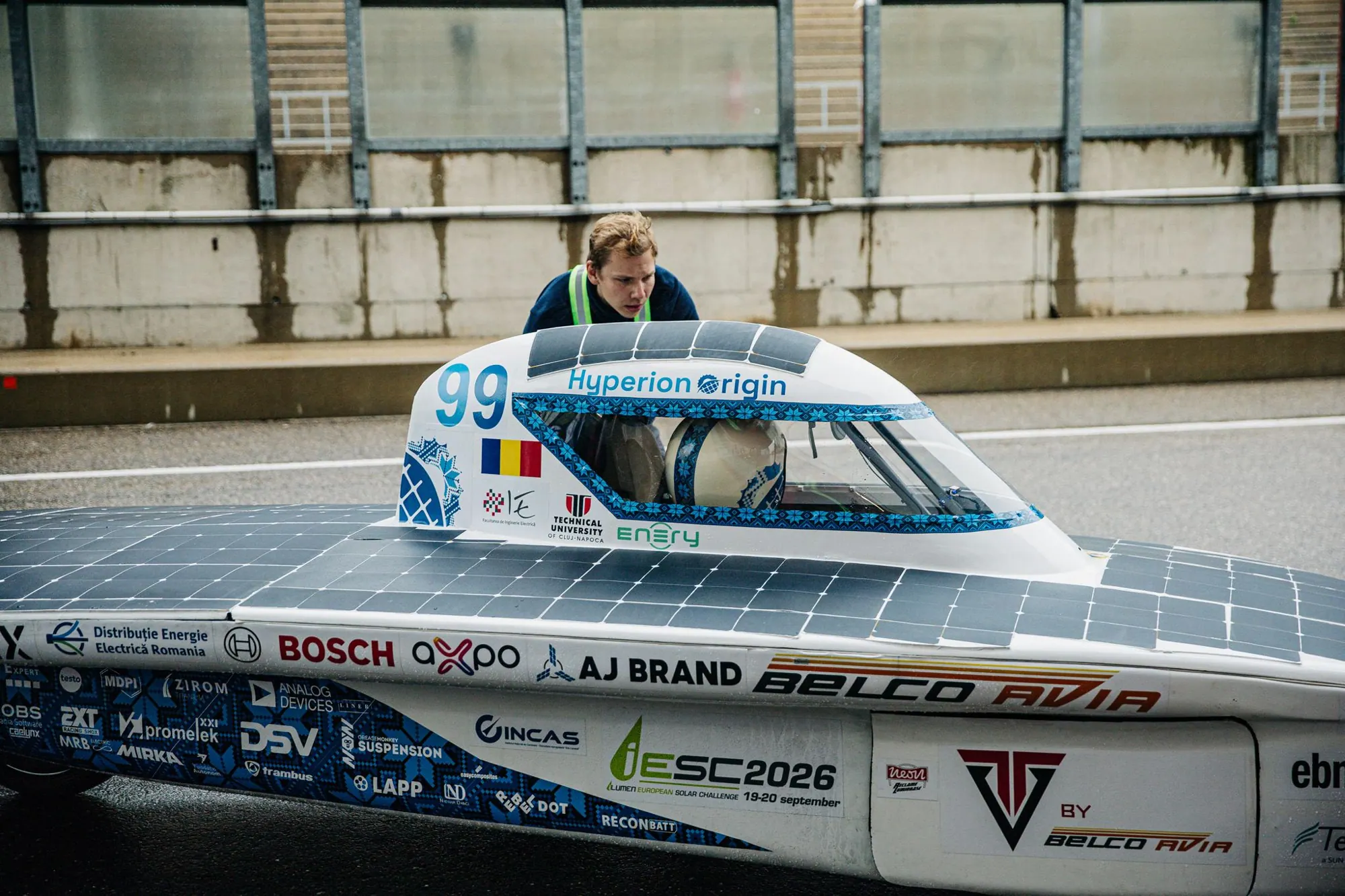
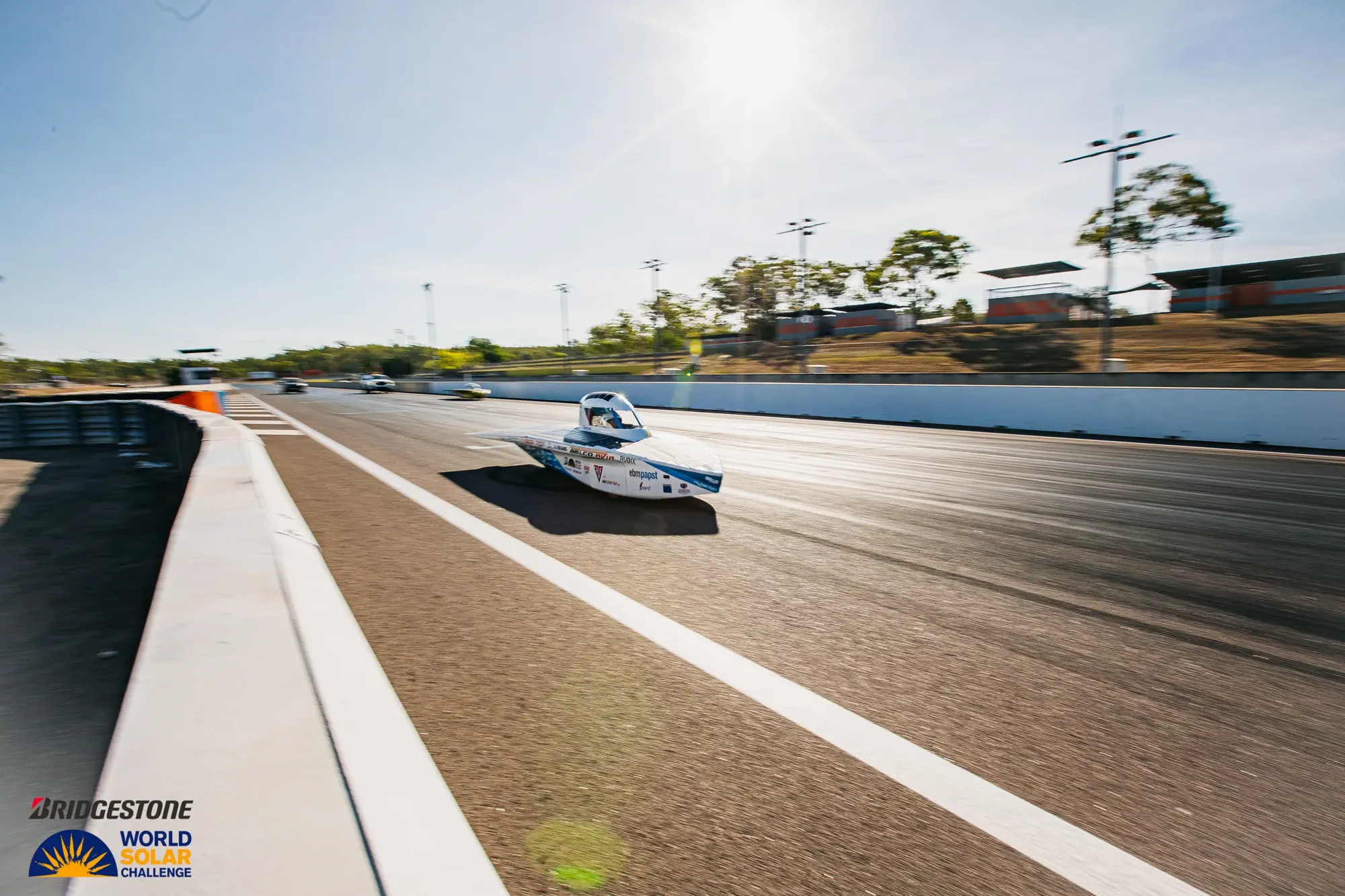
Our fifth vehicle, and the one that has gone furthest. It crossed Australia in 2025 and ran for 24 hours at Zolder in 2026, as Hyperion Origin.
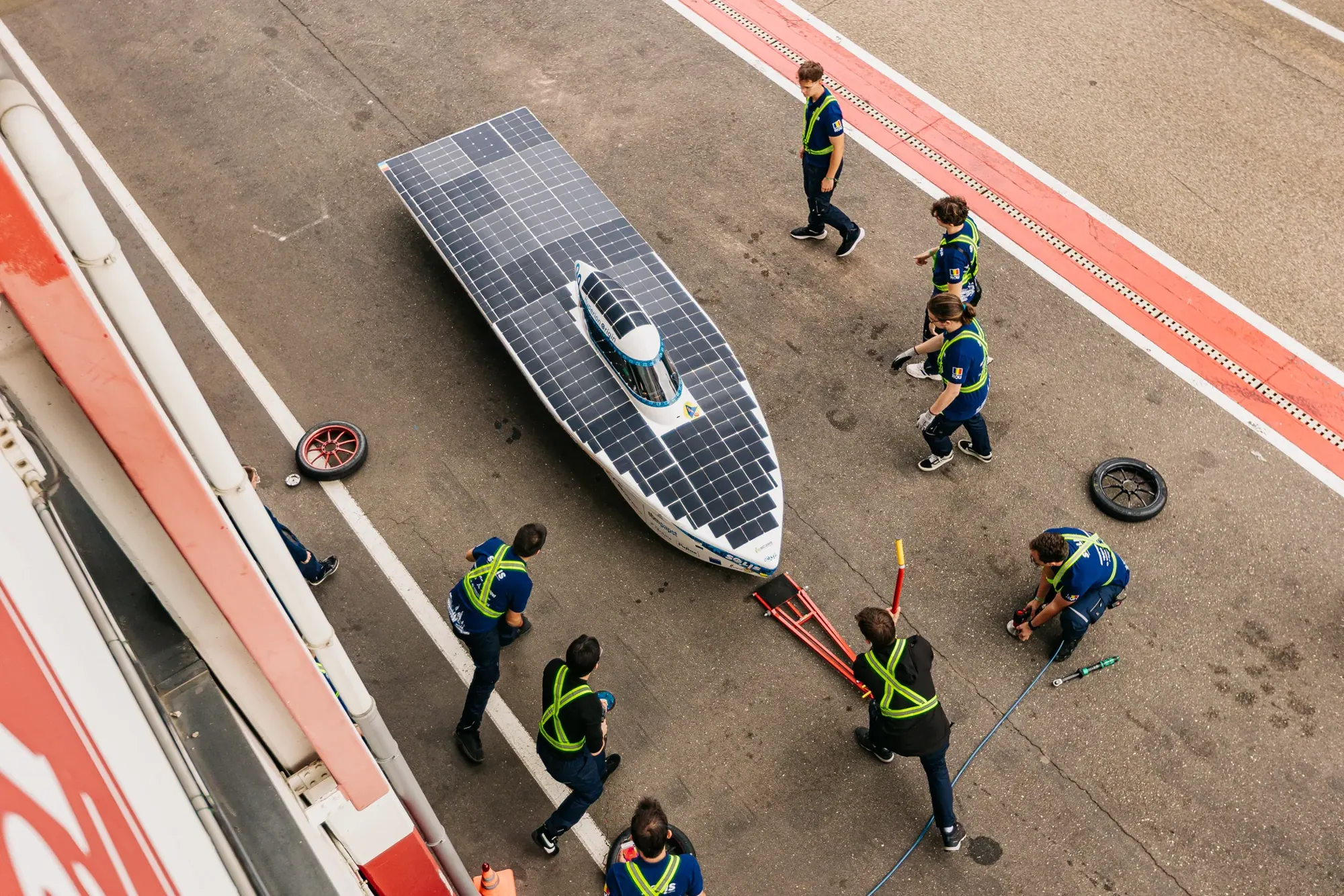
of silicon cells, encapsulated by the students.
The first Solis vehicle weighed 420.
top speed.
battery, the most the rules allow.
motor, inside the rear wheel.
Specifications.
- Weight
- 194 kg
- Length × width × height
- 5.25 × 1.45 × 1.17 m
- Solar array
- 5.89 m², silicon, over 24 %
- Battery
- 3 kWh, Li-ion
- Motor
- Mitsuba outer-rotor, 5 kW, in the rear wheel
- Top speed
- 120 km/h
- Range without sun
- Up to 300 km
- Wheels
- 3, with 100 % Ackermann steering
How it was built.
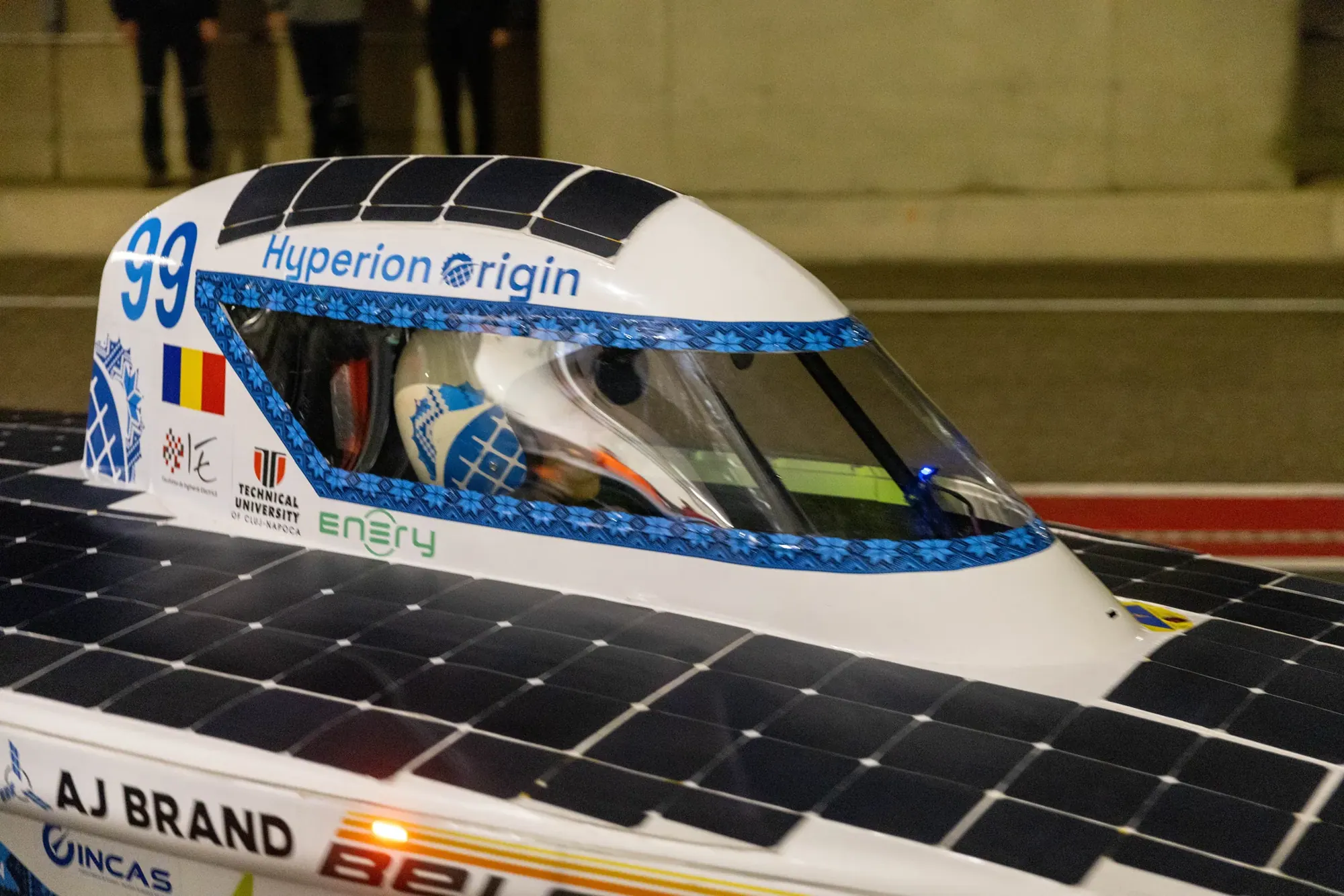
Hyperion was designed from autumn 2024 and built in the UTCN labs. It keeps EV4's carbon monocoque with a longer wheelbase and has a new, aerodynamically reworked body. The driver is protected by a Halo arch.
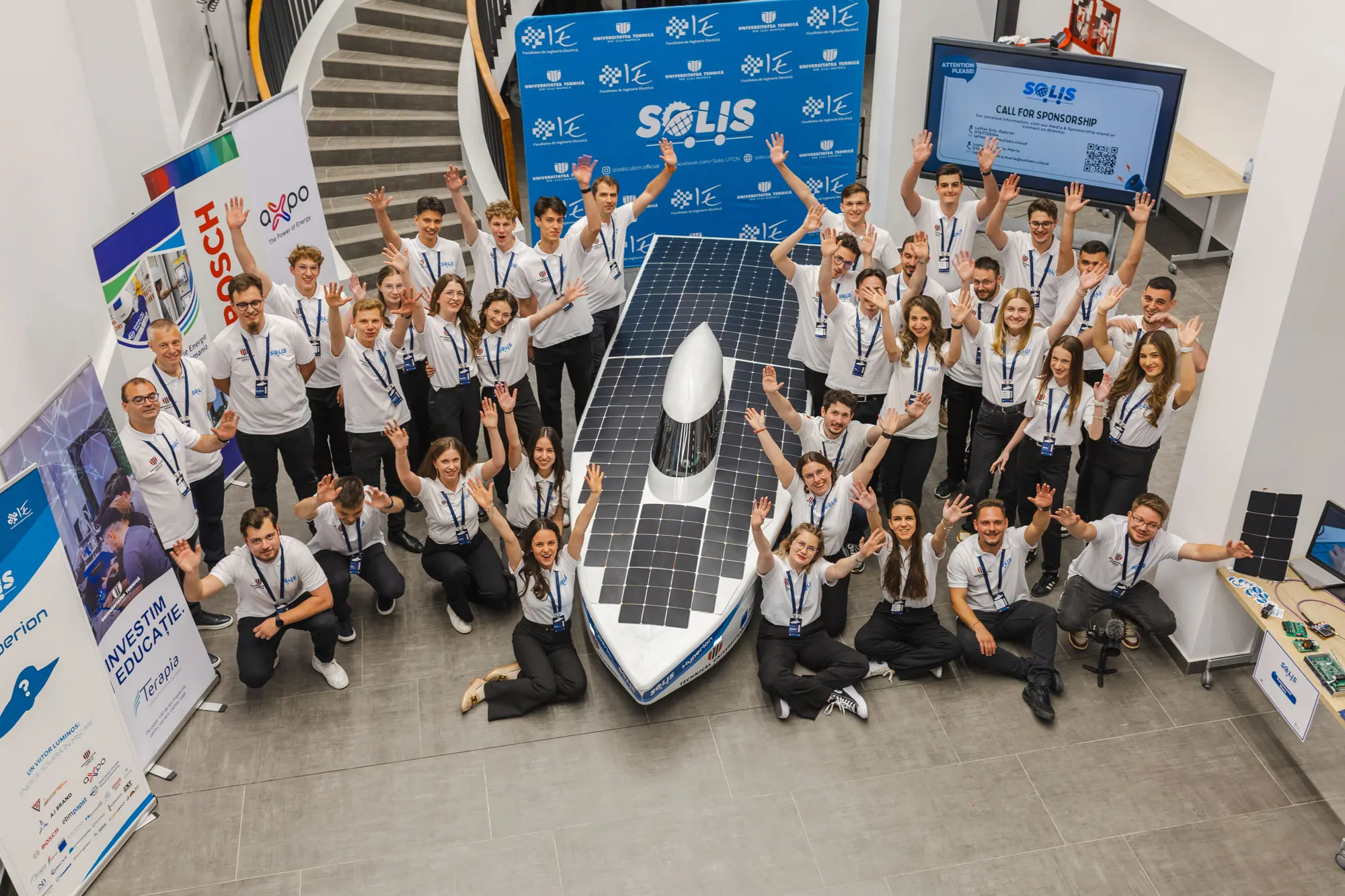
The students made nearly every subsystem themselves. They encapsulated the silicon cells by hand, reaching over 24 % efficiency against about 21 % for off-the-shelf panels. They designed the lights, cut losses in the 12 V system and chose some of the highest energy-density cells on the market for the battery.
The vehicle was launched on 16 May 2025 at UTCN Hub. In 2026, as Hyperion Origin, it was improved in steering, suspension, battery and the reliability of its electrical and mechanical systems.
Darwin to Adelaide is 3,000 km.
Hyperion drives them on sunlight.
- total weight
- 194kg
- of solar cells
- 5.89m²
- top speed
- 120km/h
Its best day: 552 km at an average of 70 km/h.
Photographs.