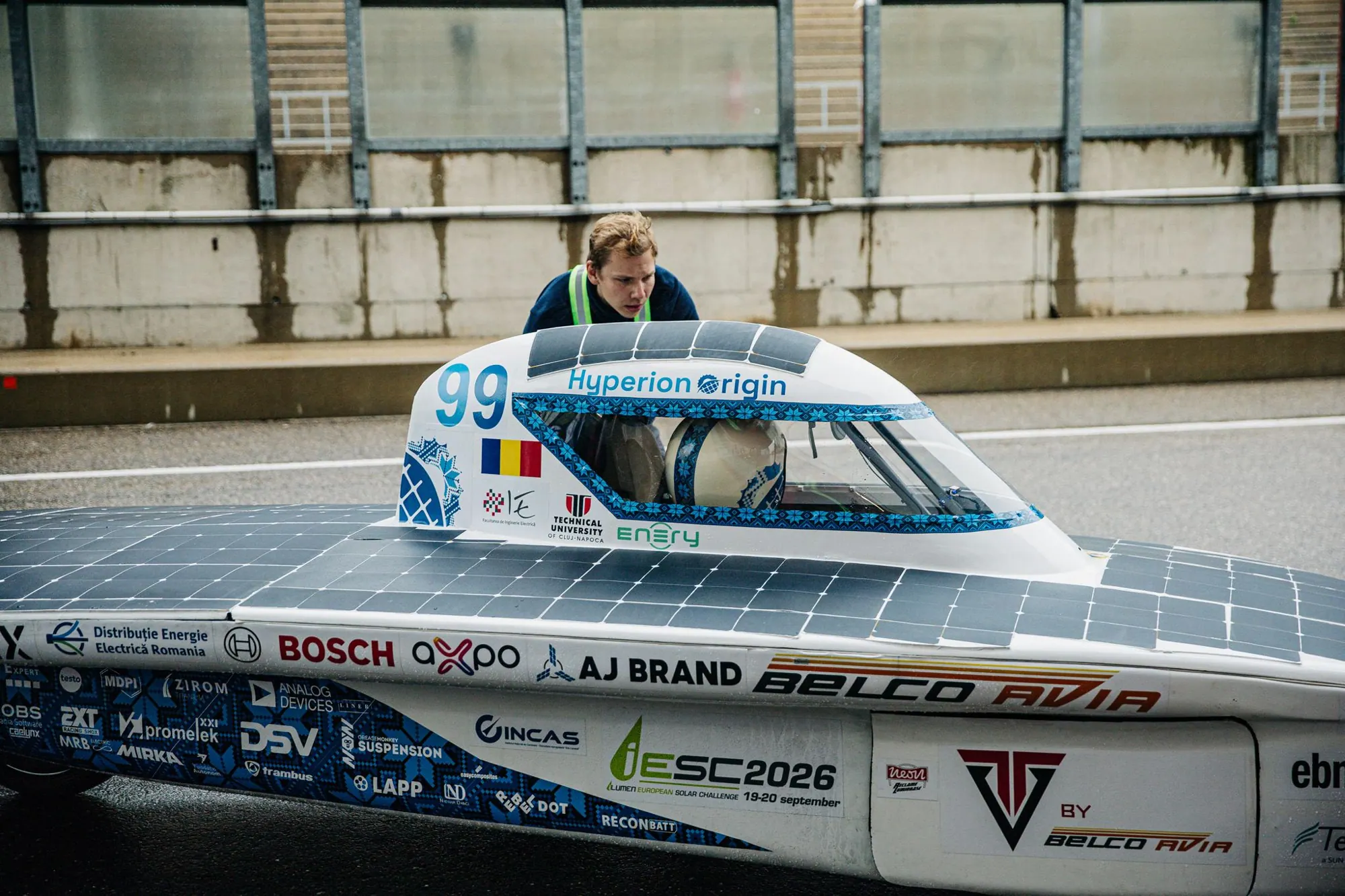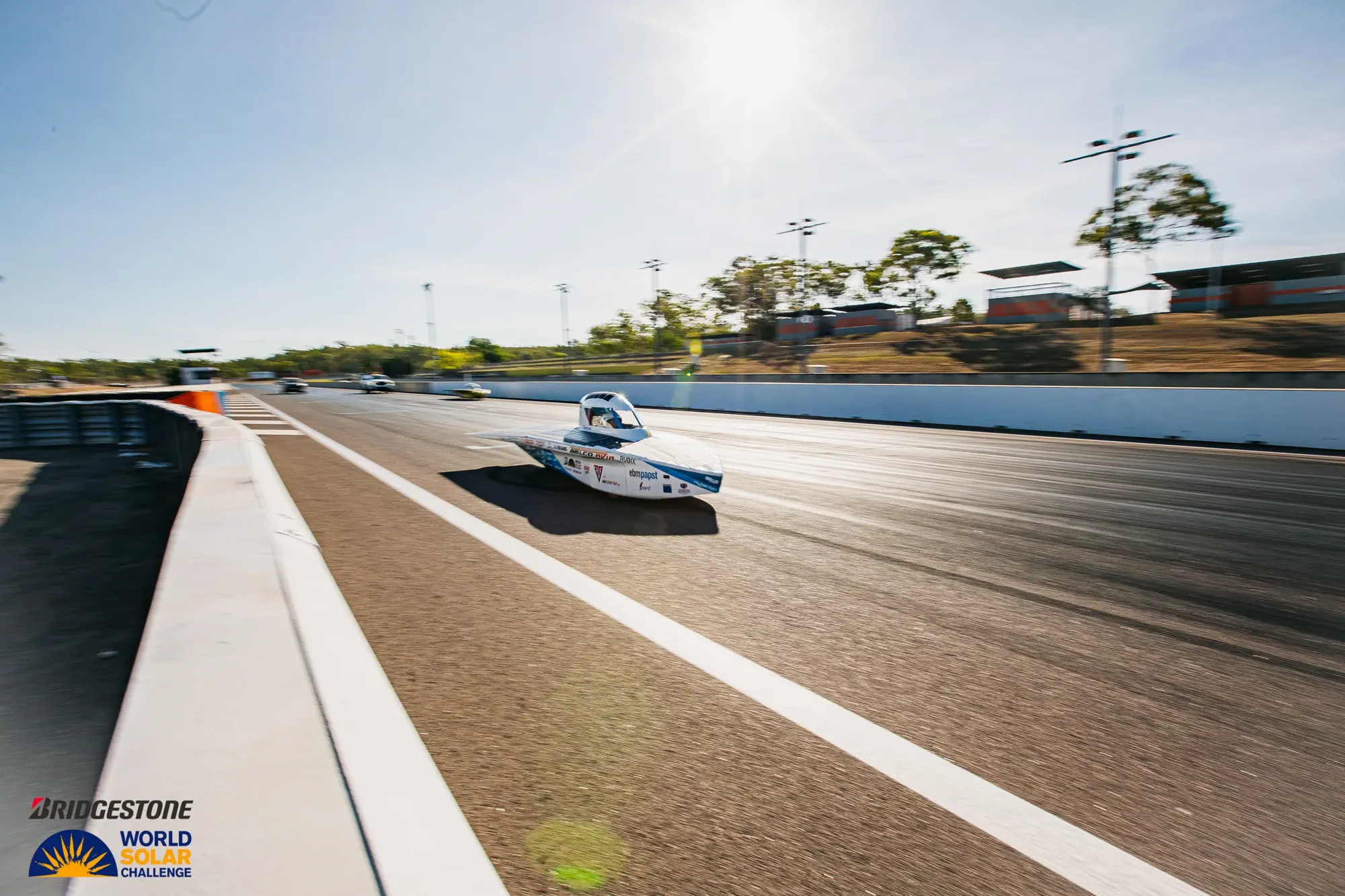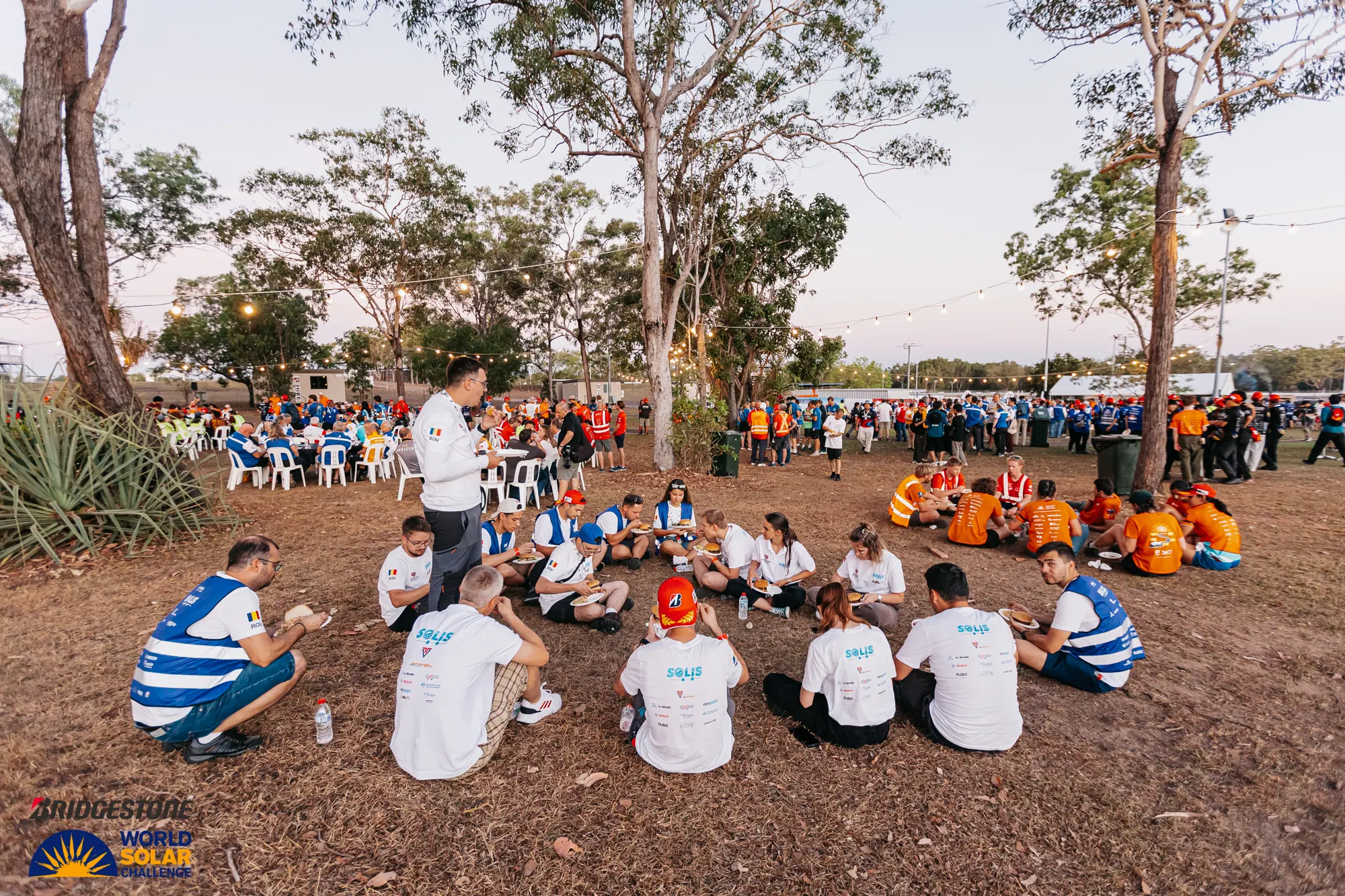

Inside the workshop where Solis builds its vehicle for Australia
Cluj-Napoca, Building Hyperion for BWSC 2025
See the original report Cluj24, in Romanian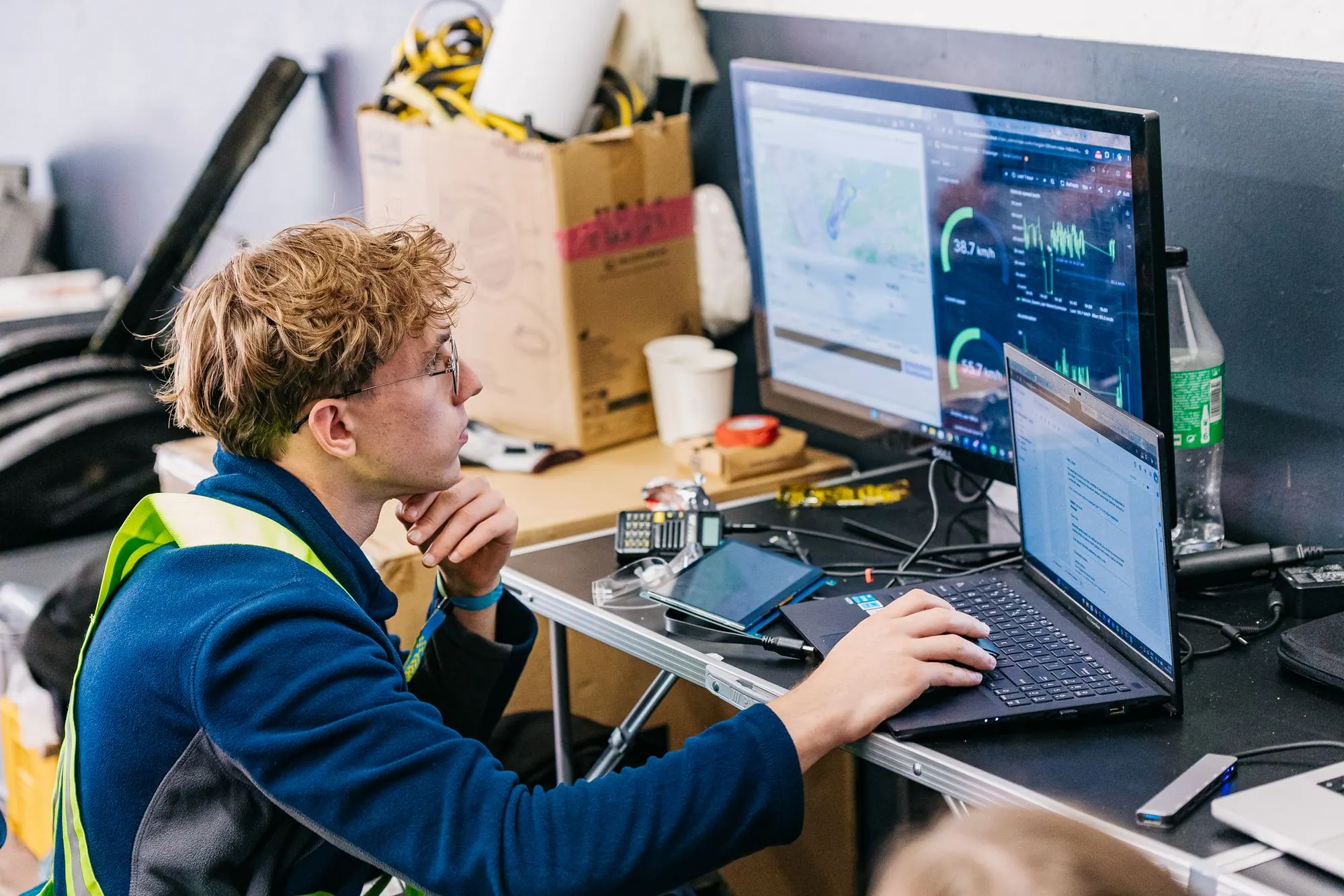
In a video and photo report, Cluj24 visits the Faculty of Electrical Engineering students building a solar vehicle for a race in Australia in August. Technical manager Raymond Nemeth says the vehicle will be ready in April, followed by tests on circuits around Cluj. The previous vehicle took nine months to design and build; design of the new one began in the autumn, and the build is 90% done, especially the body.
“As it is an endurance race, we will need a well-thought-out strategy. We monitor everything we get from the solar panels, the speed, and we analyse all the data”
Marian Vlad, Solis team member
The team has about 40 active members, of whom 20 to 25 will travel to Australia. Communication coordinator Alexandra Lupuleasa describes the 3,000 km route from Darwin to Adelaide, with driving only in daylight, until 17:00, and camping wherever the team stops. Six team drivers will take turns; the ideal driver weighs 80 kg, and sandbags make up any difference.
Team manager Eric Lefter describes a three-wheeled carbon-fibre vehicle of 180 kg with a 3 kWh battery and 6 square metres of panels, whose energy goes either to the motor or into the battery. The aim is to use energy so well that the vehicle can run on what the panels produce alone. Its top speed is 100 km/h.
Telemetry sends data from the vehicle to a computer and helps the team manage speed and consumption. Marian Vlad explains why it matters in an endurance race. Driver Mihai Stancu says the vehicle has two driving modes, and that he hopes to help the team get the best possible result on the other side of the world.
Summary written by the Solis team from the report published by Cluj24 on 30 January 2025. The original: “VIDEO FOTO. Mașină solară construită de studenții UTCN. Poate atinge 100 km/h. Va participa la un concurs în Australia”
About: Bridgestone World Solar Challenge 2025, Hyperion